Duties
Top executives typically do the following:
- Establish and carry out departmental or organizational goals, policies, and procedures
- Direct and oversee an organization’s financial and budgetary activities
- Manage general activities related to making products and providing services
- Consult with other executives, staff, and board members about general operations
- Negotiate or approve contracts and agreements
- Appoint department heads and managers
- Analyze financial statements, sales reports, and other performance indicators
- Identify places to cut costs and to improve performance, policies, and programs
The responsibilities of top executives largely depend on an organization’s size. For example, an owner or manager of a small organization, such as an independent retail store, often is responsible for purchasing, hiring, training, quality control, and day-to-day supervisory duties. In large organizations, however, top executives typically focus more on formulating policies and strategic planning, while general and operations managers direct day-to-day operations.
The following are examples of types of top executives:
General and operations managers oversee operations that are too diverse and general to be classified into one area of management or administration. Responsibilities may include formulating policies, managing daily operations, and planning the use of materials and human resources. They make staff schedules, assign work, and ensure that projects are completed. In some organizations, the tasks of chief executive officers may overlap with those of general and operations managers.
Chief executive officers (CEOs), who are also known by titles such as executive director, managing director, or president, provide overall direction for companies and organizations. CEOs manage company operations, formulate and implement policies, and ensure goals are met. They collaborate with and direct the work of other top executives and typically report to a board of directors.
There may be other types of chief executives, for example chief operating officers (COOs), chief financial officers (CFOs), or chief human resources officers, who manage a specific part of the business organization. The knowledge, skills, and job duties that these executives have will differ depending on what department they oversee.
Job titles may vary in the public sector or in the education industry. The following are examples of types of top executives working in the public sector for local and state governments:
Mayors, along with governors, city managers, and county administrators, are chief executive officers of governments. They typically oversee budgets, programs, and the use of resources. Mayors and governors must be elected to office, whereas managers and administrators are typically appointed.
Most educational systems, regardless of whether they are public or private school systems, also employ executive officers. The following are examples of top executives working in the elementary, secondary, and postsecondary educational school systems:
School superintendents and college or university presidents are chief executive officers of school districts and postsecondary schools. They manage issues such as student achievement, budgets and resources, general operations, and relations with government agencies and other stakeholders.
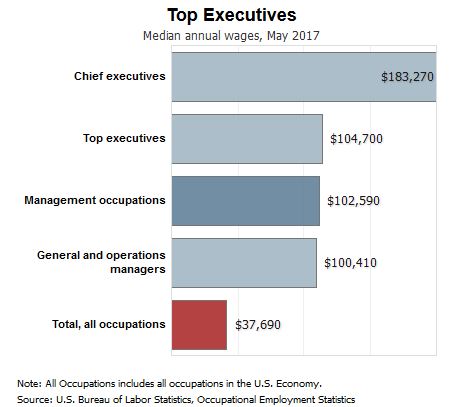 The median annual wage for chief executives was $183,270 in May 2017. The median wage is the wage at which half the workers in an occupation earned more than that amount and half earned less. The lowest 10 percent earned less than $68,110, and the highest 10 percent earned more than $208,000.The median annual wage for general and operations managers was $100,410 in May 2017. The lowest 10 percent earned less than $44,510, and the highest 10 percent earned more than $208,000.In May 2017, the median annual wages for chief executives in the top industries in which they worked were as follows: